What Surveys Say About You

Technologies designed to provide convenience are often designed to appeal to — and leverage — human nature. When it comes to surveys, designers prey on knowing that we want to be heard. To know that our opinions matter. To know that we are not invisible.
So, the same way it was a relief to be among first kids chosen for the ball team, it’s flattering to be invited to respond to a survey. The same emotions are triggered — and that’s what survey designers often count on as they use ‘'frictionless’ features to encourage participation, and enable companies to identify who we are, what we think, and what we want.
But increased public awareness that platforms are collecting our personal information to monetize it (sometimes to our own detriment) has many people wondering if it’s possible to respond to a survey anonymously. Although artificial intelligence and government-mandated tracking are making it easier to identify website users and survey respondents, there are steps to take to minimize your exposure.
If you received an email invitation to a survey, the invitation itself contains a tracker that identifies you. Once you respond (regardless where you are or what device you use) your identity is revealed. The tracking functionality can be disabled when the survey is created, but respondents have no way of knowing — so it’s safer to assume the tracking features are being used.
If the survey is not by invitation (i.e., you get to it by clicking a link on a website), use a computer at a library or school — anywhere you don’t have to log on to use it, and where many, many people use the same device. The reason here is simple: Every device has a unique identifier number that is tracked and can be used to identify you. Even a home computer shared by several people in one household is no protection, since other tracking mechanisms and analytics tools enable platforms to discern precisely who is using the device.
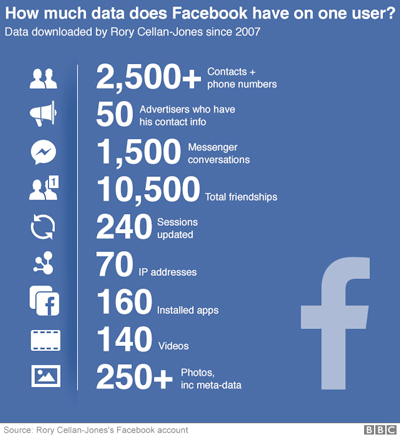
As well, many websites covertly notify Meta (Facebook) and other advertisers that you’re visiting the website. So, even before you see the survey website, Meta knows you’re interested—and that factoid is automatically added to the detailed profile Facebook has about you (even if you don’t have a Facebook account) and used for targeted advertising.
 If the survey asks for a phone number, it can be used to track and identify you.
Leave the field blank. That might seem like a ‘duh’ answer, but the reality is that many people fill in every field in a form without question simply because they are there to be filled in.
It’s sometimes the case that fields are ‘required’ to be filled out, even though the demanded information is irrelevant, or invasive, or simply a way to obtain information that could be useful for advertisers.
If a phone number is actually required, you’ll be notified on screen to go back and fill in the field. In most cases, it need not be your phone number. Using a ‘disposable temporary’ phone number is a viable alternative. That lets you receive verification codes without revealing your real phone number.
If the survey asks for an address, it can be used to track and identify you.
Leave the field blank. If an address is actually required, you’ll be notified on screen to go back and fill in the field. The address usually need not be yours. In many cases the only part of an address that has to be real is the postal code or zip code — though that, too, usually needn’t be yours. Something that is a valid postal code or zip code often suffices.
If the survey asks for an email address, it can be used to track and identify you.
Leave the field blank. If an email address is actually required, you’ll be notified on screen to go back and fill in the field.
As with phone numbers and postal/zip codes, the email address you provide has to be in the form of a valid email address. Survey systems often embed technology that checks to ensure the email is a valid one — but it usually doesn’t have to be yours. Some people provide the email address of the organization running the survey, or abuse@[platform].com or info@[whatever]. Entering the email address of your worst enemy so they’ll get the targeted ads might be tempting, but is ill advised since that seemingly-innocuous choice could be construed as harassment.
If an email address is required, that can also be used to track and identify you.
In that case, create a ‘disposable anonymous email account’ to send and receive messages without having to share your real email address. Apple’s Hide My Email service and other similar services use unique, random email addresses that forward to the email address associated with your real email. That lets you receive emails without revealing your real email address.
If a survey (or any other website) invites you to log on with your Google or Facebook (or other) account, remember that doing so enables them to track and identify you. If the survey requires you to log on to your Google or Facebook account, consider if responding to the survey is really worth your privacy.